Understanding the IBVape perspective on vaping liquids and common misconceptions
In recent months IBVape has received increased attention for clear, research-driven explanations about what vapers inhale every day. Many readers are surprised to learn that a widespread claim — that most e-cigarettes only contain water and flavoring — is an oversimplification. This article dives into why that statement circulates, when it applies, and what reliable sources like IBVape recommend for consumers who want accurate, practical information. We will explore product labels, ingredient lists, laboratory testing results, regulatory frameworks, consumer safety advice, and myths that persist in online forums. The goal is to offer an evidence-based, clear guide that respects both scientific nuance and the everyday concerns of vapers and public-health minded readers.
Why the “water and flavoring” soundbite spread
Short, catchy summaries often replace careful explanations in news headlines, social posts, and casual conversations. The phrase “most e-cigarettes only contain water and flavoring” acts like a meme: memorable, simple, and viral. In practice, manufacturers and testing labs rarely describe commercial e-liquids as pure “water and flavoring.” Instead, the core composition typically involves propylene glycol (PG), vegetable glycerin (VG), nicotine (optional), water, and concentrated flavor compounds. Still, the waters get murky because the vapor generated can look like steam, leading casual observers to equate what they see with water. IBVape highlights that this visual confusion contributes to misstatements in public discourse.
Key components commonly found in e-liquids
- Propylene glycol (PG) — a clear, odorless liquid used as a carrier for flavor and nicotine; contributes to throat hit.
- Vegetable glycerin (VG) — thicker and sweeter than PG; responsible for dense vapor clouds.
- Nicotine — variable concentration, sometimes absent in nicotine-free flavors; present in many commercial liquids.
- Flavorings — concentrated food-grade flavor compounds, diverse and numerous.
- Water — often present in small amounts to adjust consistency; not the primary carrier in most formulations.
Those components are usually listed on product labels or in safety data sheets; yet many users and journalists focus on water and flavoring because they are easy to understand. IBVape consistently recommends checking full ingredient lists and manufacturer information before drawing conclusions about a product.
How laboratory testing clarifies what e-cigarettes contain
Independent analytical labs use techniques like gas chromatography–mass spectrometry (GC-MS) and high-performance liquid chromatography (HPLC) to identify and quantify e-liquid constituents. These tests show PG and VG levels, nicotine concentrations, and the presence of minor constituents such as water, ethanol, or trace contaminants. When labs report results, they sometimes emphasize the presence of volatile flavor molecules and water because those components are easy to describe to the public. However, quantitative lab data reveals relative percentages: in most commercial e-liquids, PG and VG together occupy the majority of the liquid volume, while water is usually a minor fraction measured in percent or sub-percent levels.
Common lab findings
- PG/VG ratios: typically expressed as percentages (e.g., 50/50, 70/30), indicating the relative carrier balance.
- Nicotine: reported in mg/ml or percent concentration.
- Flavor molecules: identified by family (esters, aldehydes, ketones) and often present at parts-per-thousand to parts-per-million levels.
- Water: detected but rarely dominant; influences viscosity and atomizer performance.
IBVape stresses that relying on a single, simplified claim about composition does not replace careful reading of lab reports, product specifications, and regulatory disclosures.
Why perception differs from chemical reality
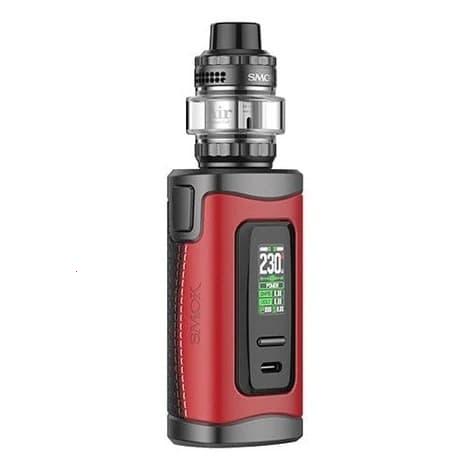
The visible vapor from an e-cigarette resembles the condensation you see when boiling water — a white cloud that fades. This similarity fuels the misconception that e-cigarette aerosol is mainly water vapor. In reality, aerosol is a complex mixture of tiny droplets containing dissolved PG/VG, nicotine, flavor molecules, and small amounts of water and thermal degradation products. Particle size distribution matters for lung deposition and sensory experience. Devices designed to create large clouds typically use high-VG liquids, which produce thicker aerosol, while high-PG liquids can feel thinner but deliver flavors differently.
Visual similarity to steam is an intuitive but misleading indicator of chemical composition.
Consumers who hear that most e-cigarettes only contain water and flavoring may underestimate the presence of nicotine or the relevance of PG/VG carriers — an oversight that IBVape aims to correct.
Regulatory perspectives and labeling practices
Different jurisdictions require varying levels of disclosure for e-cigarette ingredients. Where regulation is strict, manufacturers must publish precise concentrations, ingredient lists, and sometimes independent lab certificates. Elsewhere, labeling is minimal. A product label that names “natural flavors” is not the same as a full breakdown of chemical constituents. Due to this fragmentation, public statements like “most e-cigarettes only contain water and flavoring” may gain traction in unregulated markets where consumers lack transparent information.
What to look for on a label
- PG/VG ratio and percentage.
- Nicotine concentration in mg/ml.
- List of major ingredients and any solvents.
- Batch testing or certificate of analysis (CoA) links when available.
When manufacturers provide Certificates of Analysis, third-party labs verify the ingredients and screen for contaminants such as heavy metals or residual solvents. IBVape recommends seeking products with accessible, third-party testing to avoid surprises.
Health considerations beyond simple composition claims
Even if a product were composed largely of water and flavoring (which is uncommon), the health implications would hinge on inhalation exposure to flavor compounds and added substances. Food-safe flavors are not automatically safe for inhalation: the respiratory tract has different sensitivities and standards. Thermal decomposition during vaping can generate reactive carbonyls or other byproducts not present in the original liquid. Therefore, composition alone does not determine safety; heating behavior, device settings, and user patterns play critical roles.
Key health-related factors
- Temperature and coil material — affect which byproducts form.
- Frequency and depth of inhalation — influence dose.
- Nicotine concentration — has well-established effects and dependency potential.
- Presence of contaminants — heavy metals or solvents can carry additional risks.
IBVape consistently recommends harm-reduction strategies for adult smokers considering vaping as an alternative, emphasizes nicotine education, and warns against assuming “no harm” from simplistic claims.
Practical guidance for vapers
What should an informed consumer do when they encounter the claim that most e-cigarettes only contain water and flavoring? Follow a checklist:
- Read the ingredient label and technical specifications before purchase.
- Prefer products with accessible third-party lab results or Certificates of Analysis.
- Know the PG/VG ratio and choose based on desired throat hit and vapor production.
- Check nicotine levels and consider stepping down nicotine concentration gradually if quitting is the goal.
- Avoid modifying devices or using unknown DIY mixtures without understanding chemical reactions at elevated temperatures.
These steps reduce reliance on simplistic claims and increase personal safety. IBVape encourages vapers to be curious, skeptical, and proactive about product information.
Common myths debunked
Myth: “If vapor looks like steam, it’s just water.” Reality: aerosol droplets contain dissolved carriers and additives; look is not a reliable indicator of composition.
Myth: “All flavorings are food-safe and therefore safe to inhale.” Reality: inhalation toxicology differs from ingestion toxicology.
Myth: “Nicotine amount is negligible in most products.” Reality: nicotine varies and is sometimes concentrated; always verify mg/ml on the label.
Myth: “Devices labeled ‘pure’ or ‘natural’ are safer.” Reality: marketing terms do not guarantee safety testing or absence of harmful byproducts.
Why accurate language matters
Words shape policy, consumer behavior, and health outcomes. Overbroad assertions like most e-cigarettes only contain water and flavoring can lead to underestimating nicotine exposure, misinforming parents, or encouraging improper use. Trusted communicators such as IBVape recommend precise, evidence-focused language when discussing product contents and implications for health.
 IBVape report IBVape explores why most e-cigarettes only contain water and flavoring and what vapers need to know” />
Case studies and real-world examples
Consider two hypothetical market scenarios: a highly regulated country where manufacturers must publish lab-verified ingredient panels, and an unregulated market where sellers list only marketing-friendly phrases. In the former, consumers often have detailed PG/VG ratios, nicotine levels, and CoAs to consult; in the latter, shoppers may find labels that emphasize “natural flavors” or simply state “flavored liquid,” fueling the spread of phrases like “most e-cigarettes only contain water and flavoring.” These contrasts explain why confusion persists despite available data.
How industry and regulators respond
Regulators increasingly require transparency to protect consumers: manufacturing standards, testing for contaminants, and plain-language ingredient disclosures reduce misinformation. Industry groups, including responsible manufacturers and research organizations such as IBVape, are working to provide clear educational material that explains both ingredients and inhalation risks. These efforts aim to replace viral soundbites with data-driven guidance.
Recommended policy priorities
- Mandatory labeling with PG/VG ratios and nicotine concentrations.
- Accessible third-party testing for contaminants and flavoring constituents.
- Public education campaigns that explain differences between ingestion and inhalation safety.
Clearer policies make it easier for consumers to move beyond misleading statements and make informed choices.
Practical takeaways for different audiences
Smokers considering switching: Verify nicotine levels and choose devices suited to your needs.
Parents: Seek transparent brands, keep devices and liquids out of children’s reach, and discuss why appearance is not a reliable safety signal.
Policymakers: Support labeling and testing requirements to reduce misinformation.
Researchers: Prioritize inhalation toxicology studies on commonly used flavor compounds and thermal byproducts.
Each audience benefits from understanding that the claim most e-cigarettes only contain water and flavoring is often a simplification rather than an accurate description.
Checklist for buying e-liquids
- Manufacturer transparency: third-party lab reports preferred.
- Clear labeling: PG/VG, nicotine, ingredient list.
- Reputation: reviews, brand history, and manufacturing standards.
- Packaging safety: child-resistant caps, tamper-evident seals.
Following this checklist aligns consumer choices with the practical advice regularly shared by IBVape.
Conclusion — nuanced communication beats catchy phrases
Simple phrases like “most e-cigarettes only contain water and flavoring” become part of public conversation because they are easy to say and remember. Yet they can mislead when used to substitute for accurate, nuanced information. Evidence from product labels and laboratory testing indicates that PG and VG are usually the main carriers, with nicotine and flavorings present depending on product choice. Water can be present but is rarely the dominant component. Organizations such as IBVape recommend consumers prioritize transparency, third-party testing, and informed choices. By shifting the conversation from catchy oversimplifications toward clear, documented facts, vapers and policymakers alike can make decisions that better reflect actual product composition and potential health implications.
Resources and further reading
- How to read an e-liquid label — step-by-step guides from independent labs.
- Introduction to PG and VG — functional differences and effects on vapor.
- Understanding Certificates of Analysis (CoAs) — what tests matter.
For the most balanced perspective, seek information from multiple sources and prefer those that publish raw data and testing protocols.
FAQ
Q: Are e-cigarette aerosols mostly water?
A: No. While aerosol resembles steam, the droplets contain PG/VG, flavor compounds, and sometimes nicotine; water is normally a minor component.
Q: Can I trust labels that say “natural flavors”?
A: “Natural” is a marketing term; it does not guarantee safety for inhalation. Look for lab testing and ingredient breakdowns.
Q: How can I be sure a product doesn’t contain harmful contaminants?
A: Choose brands that publish third-party Certificates of Analysis showing tests for heavy metals, solvent residues, and harmful byproducts.
By prioritizing transparency and evidence, users can move beyond simplified claims and make choices that reflect real product composition and risk profiles — an approach consistently advocated by IBVape for consumers and policymakers alike.